
Short answer
Palliative care supports a person living with a serious, life-limiting illness and their family by addressing symptoms, comfort, emotional and practical needs. Hospice care is part of that support when care is focused on the end of life. In Singapore, care may be provided at home, through day hospice or in an inpatient hospice, depending on the person’s condition, wishes and what can safely be managed.
Important: This guide is not a prognosis or treatment plan. Speak to your parent’s doctor or palliative-care team about changing symptoms, care choices and urgent concerns. Call 995 for a life-threatening emergency.
What palliative care really means
Palliative care is sometimes misunderstood as “giving up.” It is not. MOH describes it as care that supports and improves quality of life for people with life-limiting illness and their families by addressing physical, psychological, social and spiritual needs. It can include pain and symptom management, emotional support, grief assistance and caregiver training. MOH: Palliative Care
The goal is to help the person live as comfortably and meaningfully as possible, while helping the family understand what to expect and how to cope. Palliative care may be introduced alongside treatment. The timing and approach are clinical decisions that should be discussed with the patient and care team.
Palliative care, hospice and end-of-life care: the practical difference
| Term | What it usually means | Family question to ask |
|---|---|---|
| Palliative care | Support for symptoms, comfort, decision-making and family needs in serious illness | “What support would improve comfort and daily quality of life now?” |
| Home palliative care / home hospice | Palliative medical, nursing and psychosocial support in the person’s home | “Can home be safe and sustainable, including at night?” |
| Day hospice | Centre-based palliative care and social support for people able to attend | “Would a structured daytime programme help the patient and caregiver?” |
| Inpatient hospice palliative care | Inpatient support when care cannot be managed safely at home or in the community | “What specialised care is needed that cannot be provided elsewhere?” |
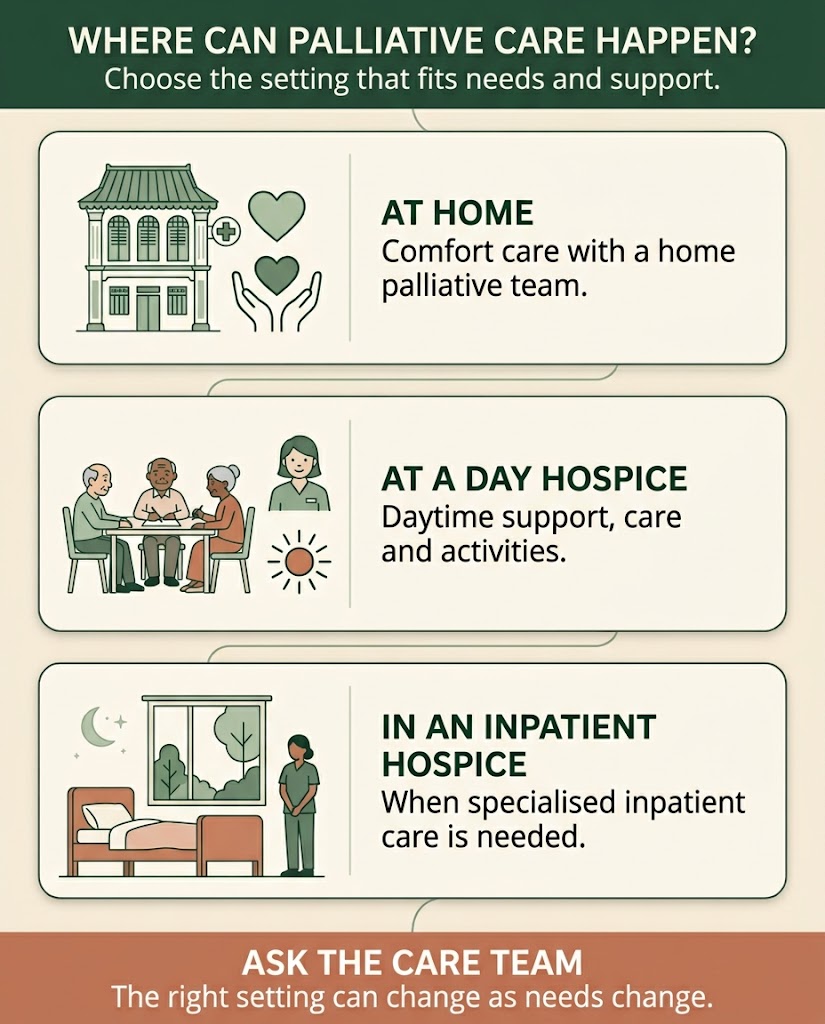
Names vary, but families should focus on the actual service, not the label. Ask what clinical and practical support is provided, who is contactable after hours, and what circumstances would lead to a transfer or change in setting.
When to ask for a palliative-care referral
Ask the treating doctor or medical social worker when illness is serious, symptoms are difficult to manage, care needs are increasing, hospital visits are becoming frequent, or the family wants help discussing goals of care. MOH says doctors and medical social workers can advise and refer patients to suitable palliative-care services. MOH: Palliative Care
It is reasonable to ask early, before the household reaches a breaking point. If your parent is in hospital, also read What to Do When a Parent Is Discharged From Hospital. A referral does not lock the family into a particular care setting or mean that other treatment stops. It opens a conversation about comfort, support, decisions and what matters to the patient.
Home palliative care: when home is the preferred setting
Home palliative care may be appropriate when the patient wishes to be at home and their needs can be supported safely there. AIC states that home palliative care supports people with serious illnesses, including advanced dementia (see Dementia Care Options in Singapore) or cancer, with palliative care at home; it also includes caregiver training and guidance. AIC: Home Palliative Care
Before choosing home, discuss these realities openly:
- Who will be with the patient during the day, overnight and in an emergency?
- What clinical symptoms may change, and whom should the family call?
- Is the bedroom, bathroom and route into the home workable for equipment and safe transfers?
- What training will caregivers receive for comfort care and routine tasks?
- What equipment, consumables, medication and delivery arrangements are required?
- What support is available for the caregiver to rest?
Home is not automatically the “best” choice if caregivers are exhausted, the home cannot be made safe or the symptoms need more specialised management. The most compassionate setting is the one that can meet the person’s needs with dignity and realistic support.
Day hospice care: support outside the home

Day hospice can support people with serious illness through palliative care and social activities at a centre. AIC notes that it may serve people with illnesses such as advanced dementia or cancer. AIC: Day Hospice Care
It may work when the person can travel safely, appreciates activity or companionship, and the family needs structured daytime relief. Ask about transport, symptom support, meals, personal-care help, rest facilities, medical escalation and whether attendance can be adjusted as needs change.
Inpatient hospice: when home or community care is not enough
Inpatient Hospice Palliative Care Service (IHPCS) is for people with serious illness who can no longer be cared for at home and need inpatient support. AIC describes it as medical and emotional support focused on relieving pain and discomfort and supporting both patient and caregivers. AIC: IHPCS
The AIC page sets out clinical eligibility details, including prognosis and symptom-management circumstances; do not self-assess eligibility from an online guide. Ask the treating team whether inpatient hospice is appropriate and what care need the service would address. MOH similarly states that IHPCS serves end-of-life patients who cannot be cared for at home and require inpatient care. MOH: ILTC Services
Moving to an inpatient hospice does not mean family involvement ends. Families can still share the person’s routines, priorities, preferred name, language, music, faith practices and comforting items, and ask how the team will keep them informed.
A family conversation framework
Hard conversations are easier when they begin with the person’s values rather than a list of procedures. Choose a quiet time and ask permission to talk. Use short questions:
- What makes a good day for you now?
- What worries you most about being unwell or needing more care?
- Who should speak for you if you cannot speak for yourself?
- Are there things you want more of—comfort, time at home, familiar food, visitors, prayer, music, fewer hospital trips?
- What would you want us to know if you become too tired to explain?
Do not force a final decision in one conversation. Advance Care Planning (ACP) is a separate process that can help communicate values and wishes to loved ones and healthcare providers. Ask the care team about the appropriate ACP support rather than treating this guide as legal or medical documentation. The LPA, ACP and Will Explainer sets out how ACP differs from a Lasting Power of Attorney.
Caregiver preparation: the questions that prevent panic
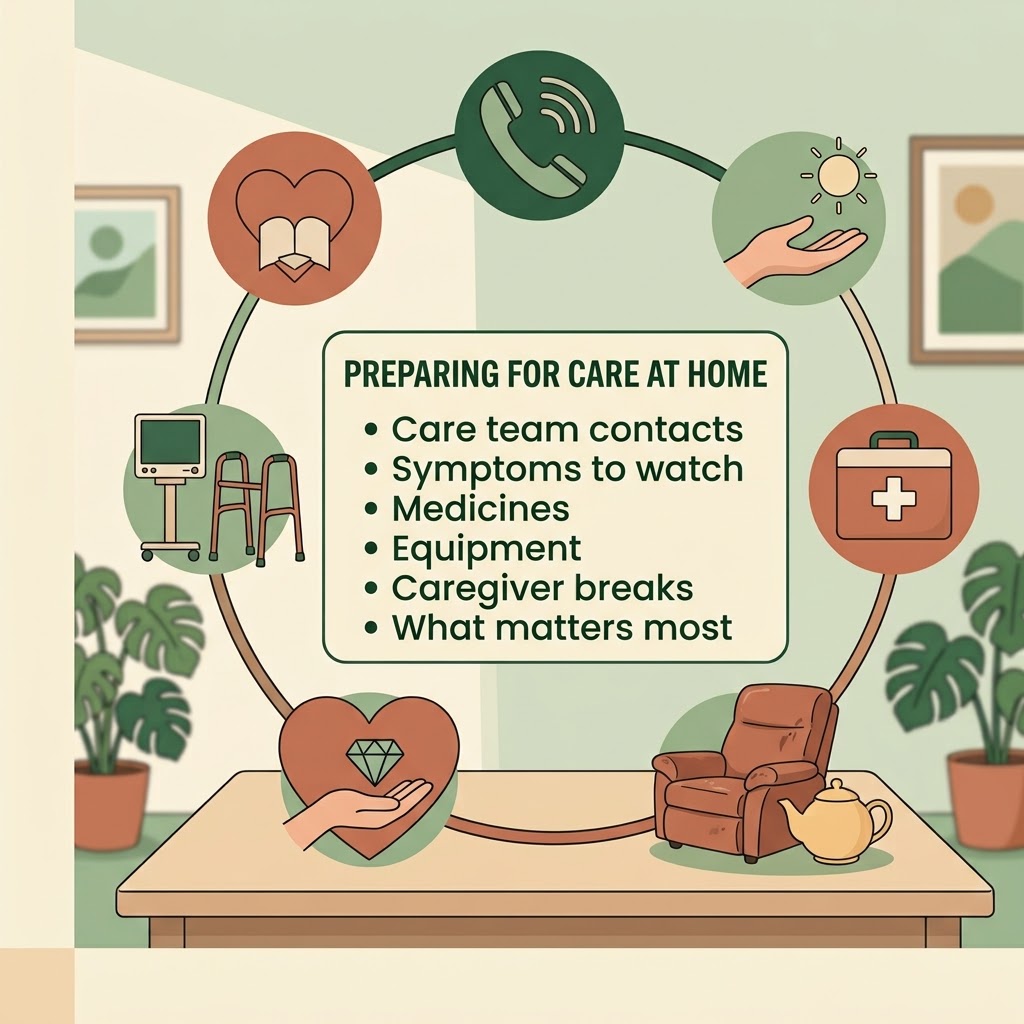
Ask the palliative team for a written plan covering:
- Symptoms: What changes are expected? Which require routine advice, urgent medical advice or 995?
- Medication: What is each medicine for, how is it given and who can help if swallowing changes or symptoms are uncontrolled?
- Contact routes: Which number is for daytime, after-hours, non-urgent and emergency support?
- Equipment: What is needed now versus later? Who arranges delivery, maintenance and collection?
- Personal care: Who helps with bathing, toileting, transfers and meals when the family cannot?
- Caregiver breaks: Is home-based respite or another support option suitable? See Respite Care for Elderly Parents in Singapore.
- Emotional support: Who can the patient and family speak to about fear, grief, conflict or spiritual concerns?
AIC’s compassionate-discharge guidance advises families to work with the home hospice team on needed equipment and to discuss alternative care options with the medical team if continuing care is required. AIC: Compassionate Discharge
Costs, subsidies and financial questions
Costs depend on service setting, provider, care needs, transport, supplies and subsidy eligibility. MOH provides subsidies for eligible Singapore Citizens and PRs receiving home palliative care, day hospice or inpatient hospice palliative care. Under the framework effective since 1 October 2024, the same rates apply to all three settings: up to 80% for Singapore Citizens and up to 50% for Permanent Residents, depending on monthly per-capita household income. Even in the highest income tier, citizens receive 50% and PRs 25%. Households with no income are assessed on the Annual Value of their home. MOH: Palliative Care Subsidies
MOH’s MediSave guidance states that home palliative and day hospice patients using their own MediSave have no withdrawal limit for the bill; when an adult patient uses a family member’s MediSave, a lifetime limit of S$2,500 applies. For inpatient hospice, MediSave can be used for up to S$250 a day for general palliative care and up to S$350 a day for specialised palliative care. MOH: Long-Term Care and MediSave Rules and bills change, so ask the provider or medical social worker for a current written explanation.
Do not focus only on clinical bills. Families may also face transport, adult-diaper, equipment-rental, caregiver and income-loss costs. Raise these with the medical social worker early.
Questions to ask every palliative or hospice provider
- What services can you provide for this patient’s current symptoms and needs?
- What is the after-hours contact and response process?
- What caregiver training will we receive?
- Which equipment, medication and consumables are included, arranged or paid separately?
- How do you communicate a deterioration, hospital transfer or change in care goals?
- What emotional, social-work and spiritual support is available?
- What are the full expected charges before and after any confirmed subsidy?
- If home care stops being workable, what alternatives should we discuss?
Use the ElderSG Questions-to-Ask Generator to prepare for the meeting, and record agreements in the Care Decision Navigator.
Frequently asked questions
Does palliative care mean treatment has stopped?
Not necessarily. Palliative care focuses on quality of life and support around serious illness. The treating team should explain how it relates to the person’s existing treatment and goals.
Can palliative care be provided at home?
Yes, for people whose needs can be safely supported at home. The home hospice/palliative team will advise on suitability, equipment, caregiver training and contact arrangements.
Is an inpatient hospice only for cancer patients?
No. Palliative and hospice services can support people with serious life-limiting illnesses, including non-cancer conditions. Suitability is a clinical decision.
How much subsidy is available for hospice and palliative care?
MOH subsidises home palliative care, day hospice and inpatient hospice at the same rates: up to 80% for Singapore Citizens and up to 50% for Permanent Residents, depending on household income. MediSave can also be used, within MOH’s limits. Ask the provider or medical social worker for a written estimate.
How do we ask for a referral?
Speak to the doctor, nurse or medical social worker who knows your parent’s condition. Ask directly whether a palliative-care assessment would help and which service setting is appropriate.
What to do next
- Ask the treating team for a palliative-care conversation or referral.
- Discuss what matters most to the patient and write it down.
- Compare palliative and hospice care listings by service setting and location.
- Make a caregiver contact and emergency plan before discharge home.
- Ask about ACP separately if the person wishes to communicate future care values and preferences.
Sources
- Ministry of Health: Palliative Care
- Ministry of Health: Subsidies for Palliative Care Services
- Ministry of Health: MediSave for Long-Term Care
- Ministry of Health: Intermediate and Long-Term Care Services
- Agency for Integrated Care: Home Palliative Care
- Agency for Integrated Care: Day Hospice Care
- Agency for Integrated Care: Inpatient Hospice Palliative Care Services
- Agency for Integrated Care: Compassionate Discharge
Editorial methodology and independence
This guide uses current public guidance from MOH and AIC, checked on 5 October 2026. It does not give prognosis, medical advice, legal advice or a guarantee of service eligibility. ElderSG is free for families; any future featured profile or consent-based enquiry relationship will be labelled and will not determine editorial recommendations.